All News

1545 technical news articles

最新模型

LLaDA 2.2 Lets Diffusion Models Add and Delete Tokens Mid-Generation, Targeting Iteratively Correctable Agent Loops

inclusionAI has open-sourced the 100B-class LLaDA2.2-flash, using Levenshtein Editing to let parallel decoding insert, delete, and replace content. The model outperforms the company’s own autoregressive baseline in some agent benchmarks and throughput tests, but still trails in code repair and function-calling accuracy, while serving support remains incomplete.
代理工具

FluxBench Puts Chip Agents Through the Full RTL-to-GDS Flow, With Performance Gaps of Up to 86% on the Same Model Architecture

FluxBench uses standardized prompts, tools, and technology libraries to test agents across the full flow from RTL generation through synthesis, placement and routing, and ECO, rather than evaluating only one-shot code output. The authors report that different agent frameworks using the same base model can exhibit a performance gap of 86.27%, although the commercial EDA experiments are limited in scope and the paper was previously withdrawn and resubmitted.

代理工具

Dynamic Forecasting Leaderboard Reveals the Advantage of Specialized Agents: Frontier General-Purpose Models Do Not Dominate ForecastBench

ForecastBench’s preliminary leaderboard, updated July 27, shows specialized Torchcast AI agents taking all three top spots, with the highest Brier Index reaching 65.6. The GPT-5.5 search agent and the median superforecaster score fall within a similar range, but differences in question counts, submission timing, and confidence intervals limit direct ranking comparisons.

推論系統

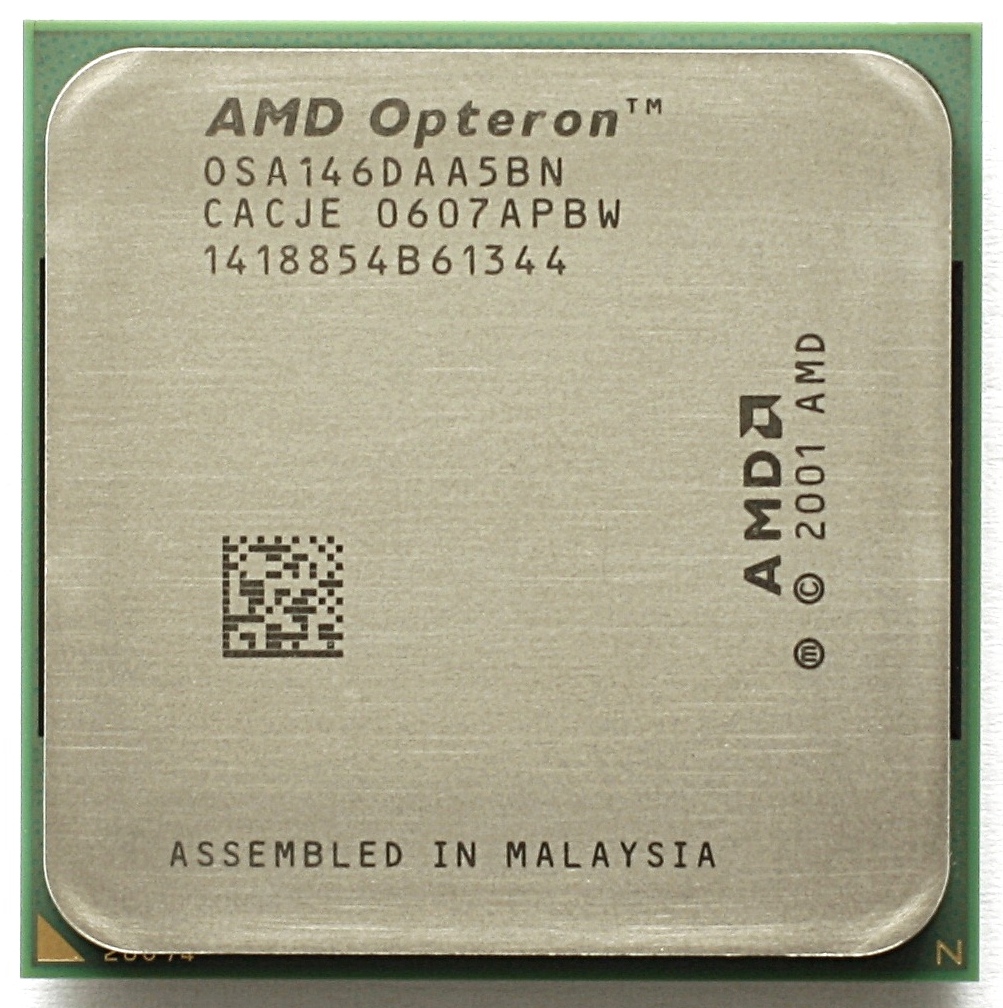
AMD Open-Sources Hyperloom to Automatically Rewrite and Validate GPU Inference Optimizations Through a Multi-Agent Closed Loop

AMD has released ROCm Hyperloom 1.0.0a1, enabling agents to handle everything from performance profiling to kernel and host-code modifications, then decide whether to retain changes based on correctness and speed tests. The initial release supports only three Instinct GPUs, and the claim of reducing optimization time “from weeks to hours” remains AMD’s own; adopters will need to reproduce the results with their own models.

AI 安全

Low-Quality AI Reports Drive Up Triage Costs as GitHub Bug Bounty Program Adopts Public and Invite-Only Tracks Today

Starting July 27, GitHub is using a HackerOne signal threshold to restrict submitters without an established track record, while moving higher rewards and faster responses to an invite-only VIP program. The changes directly address the rise in low-effort and AI-generated reports, but may also raise the barrier for new researchers submitting valid vulnerabilities.

AI 研究與訓練

VIGOR Dynamically Allocates RLVR Rollouts Based on Reward Variance, Cutting Sampling for Mathematical Reasoning Training by Up to 2.3×

A new study replaces the fixed number of reasoning trajectories generated for every problem with a strategy that concentrates additional compute on samples exhibiting greater reward disagreement. The authors report higher rollout efficiency on mathematics and coding tasks, but have not released their code, while actual GPU time and scalability to larger models remain to be verified.

代理工具

Antigravity CLI 1.1.7 Stops Disabled Plugins from Running Hooks and Adds Full Context to Compound Command Approvals

Google has fixed an issue in Antigravity CLI where hooks, rules, and other custom components continued to load after a plugin was disabled, preventing broken or untrusted scripts from continuing to interfere with agent workflows. The new version also displays compound shell commands in full when approval is required, but relaxes OAuth issuer validation for compatibility with non-standard MCP providers—a change that deployers should review separately.

最新模型

AMD Opens the Full Instella-MoE Training Pipeline, With the 16B Model Activating Only 2.8B Parameters per Token

AMD has released six Instella-MoE checkpoints spanning pretraining, mid-training, long-context extension, SFT, DPO, and reinforcement learning, along with the training frameworks, data recipes, and inference code. The model uses Gated MLA and FarSkip-Collective to reduce attention and cross-GPU communication costs, but a formal technical report and independent evaluations are still pending.