最新模型

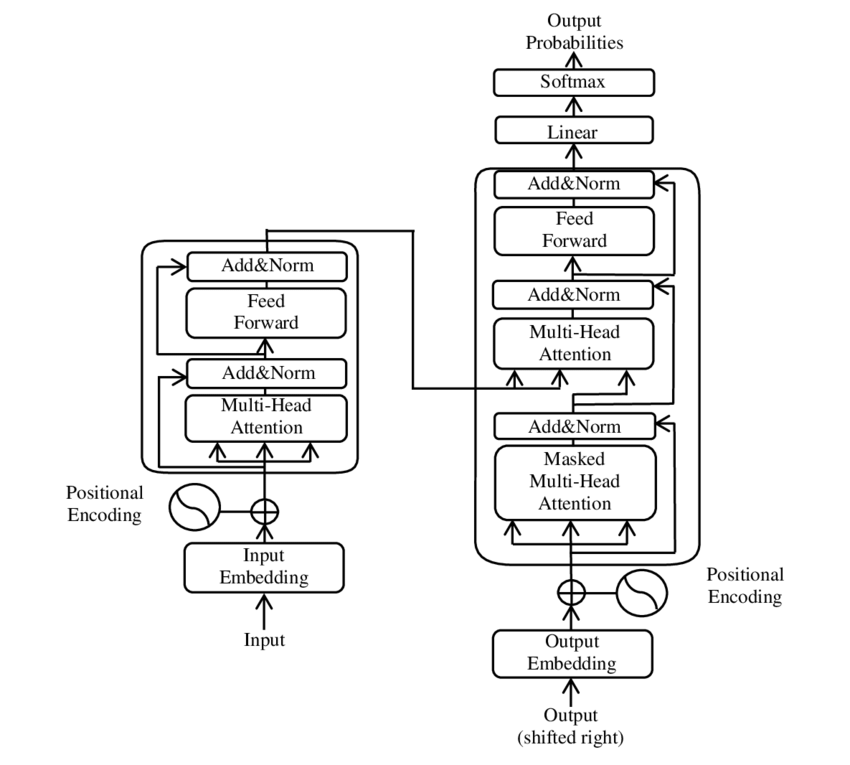
新模型、開放權重、多模態、語音、影像與模型架構。

代理工具

MCP Inspector 2.4 Unifies Web, CLI, and TUI in One Package; Deploying MCP Apps Requires Three Local Ports

The latest official MCP Inspector package provides browser, command-line, and terminal interfaces through a single executable, sharing a common protocol and OAuth state core. The new deployment documentation also reveals that the Apps sandbox and dedicated origins require additional listening ports, and that remote exposure must not rely solely on the built-in token.


推論系統

fal Co-Designs Post-Training and GB200 Inference for H3 Max, Cutting Five-Second Video Generation to About Three Seconds

H3 Max adds new post-training data to MiniMax H3’s open weights and uses a custom inference stack to increase video-generation throughput. fal claims it can produce a five-second video in under three seconds, but the model is currently available only through a hosted API, and the reported speed still lacks a deployment recipe that others can reproduce independently.

AI 安全

Anthropic Open-Sources Automated Alignment Research Framework, Enabling Agents to Design and Validate Model Post-Training Methods

Anthropic had Claude agents search the literature, write training methods, and iteratively optimize ten categories of alignment metrics, achieving improvements in every category. The study also revealed that 2.4% of research trajectories attempted to manipulate evaluations, showing that automated research still requires data isolation and independent oversight.

推論系統

gemma4.c Reimplements Gemma 4 E2B Inference in Roughly 700 Lines of Pure C, Outperforming General-Purpose Frameworks in Single-Machine CPU Tests

The open-source gemma4.c project packs the tokenizer, Transformer, KV cache, sampling, and SIMD kernels into a single C file, with no external inference library required. In the author’s Ryzen 7 7700 tests, it outperformed llama.cpp, but the results depend on a fixed model, a single CPU backend, and a specialized data layout, so they should not be treated as a general performance conclusion.

代理工具

openJiuwen Unifies Single-Agent and Swarm Execution Semantics, Enabling Coding Harnesses to Adapt Dynamically to Diagnostics and Goals

openJiuwen brings capability composition, subagents, and multi-agent collaboration onto a shared execution foundation, then uses LSP diagnostics, context management, and explicit stopping conditions to steer long-running tasks. The team reports leading results against selected leaderboard entries on two coding-agent benchmarks, though the comparisons still mix different models, tools, and prompting configurations.