硬體

AI 晶片、GPU、資料中心、邊緣裝置與硬體安全。

推論系統

Sol-Attn Dynamically Sparsifies Attention Within Online Softmax, More Than Doubling End-to-End Video Generation Speed

NVIDIA researchers have unveiled Sol-Attn, a training-free technique that selects key blocks during attention computation and approximates the contributions of skipped blocks. In NVIDIA's tests across several video models, it delivered roughly 1.9× to 2.34× end-to-end speedups, although its quality and generalization across hardware still require independent verification.
推論系統

NVIDIA Dynamo Provides Multi-Node Deployment Recipes for Kimi K3; Million-Token Inference Requires at Least 16 GB200/GB300 GPUs

An experimental Dynamo release adds multimodal processing, reasoning, and tool-call parsing for Kimi K3, along with Kubernetes recipes for aggregated inference and disaggregated prefill/decode. The recipes quantify the deployment threshold for the 2.8T-parameter MoE model in terms of rack topology, but they have not undergone formal QA, and the GB200 configuration still has a known startup error.

GitHub Repo

Open Secure AI Alliance Sets Out to Build an Open Agent Defense Stack, but Shared Tools and Governance Have Yet to Materialize

NVIDIA and more than 30 organizations have formed the Open Secure AI Alliance, with plans to share models, agent frameworks, identity, isolation, and vulnerability-scanning technologies. Its initial members have identified foundational components including NOOA, SPIFFE/SPIRE, Safetensors, Lightwell, and MDASH, but the alliance has yet to announce a shared repository, testing specifications, or a delivery timeline.

硬體

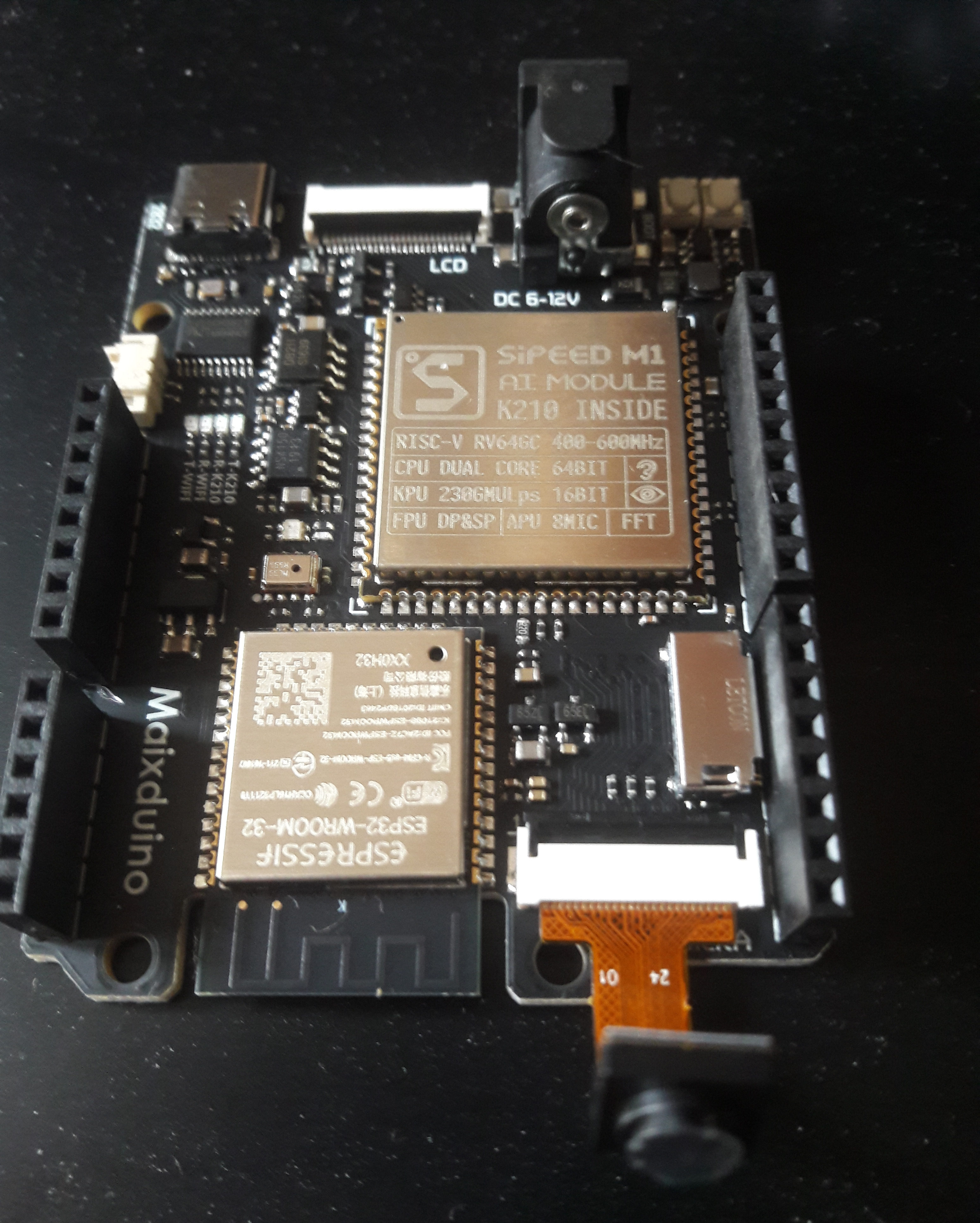
ESP32-S3 Runs a 28.9-Million-Parameter Model from 16MB Flash Using Hierarchical Embeddings, Generating About 9.5 Tokens per Second

The open-source esp32-ai project moves most parameters into memory-mapped Flash while keeping only a small Transformer core in fast memory, enabling a roughly $8 microcontroller to generate text entirely offline. The result shows that hierarchical models can be embedded in firmware, but TinyStories-level output should not be equated with general language understanding or device-control capabilities.

硬體

Nemotron 3 Ultra Integrated with ACE-RTL Iterative Agent Achieves a 97.1% Average Pass Rate Across Nine Chip Design Task Categories

NVIDIA put Nemotron 3 Ultra into a fixed generation, simulation, and reflection loop, achieving a 97.1% average pass rate across nine categories of RTL tasks in CVDP. The results also show that the agent framework can substantially improve scores across models, although the comparison remains limited to three open models and a single evaluation pipeline.

代理工具

FluxBench Puts Chip Agents Through the Full RTL-to-GDS Flow, With Performance Gaps of Up to 86% on the Same Model Architecture

FluxBench uses standardized prompts, tools, and technology libraries to test agents across the full flow from RTL generation through synthesis, placement and routing, and ECO, rather than evaluating only one-shot code output. The authors report that different agent frameworks using the same base model can exhibit a performance gap of 86.27%, although the commercial EDA experiments are limited in scope and the paper was previously withdrawn and resubmitted.

推論系統

AMD Open-Sources Hyperloom to Automatically Rewrite and Validate GPU Inference Optimizations Through a Multi-Agent Closed Loop

AMD has released ROCm Hyperloom 1.0.0a1, enabling agents to handle everything from performance profiling to kernel and host-code modifications, then decide whether to retain changes based on correctness and speed tests. The initial release supports only three Instinct GPUs, and the claim of reducing optimization time “from weeks to hours” remains AMD’s own; adopters will need to reproduce the results with their own models.