AI 科學與高效能運算
U.S. Department of Energy Launches 278 AI Science Workflow Projects Linking Agent Frameworks, Models, and National Laboratory HPC
The first group of Genesis Mission projects spans nuclear energy, critical minerals, chip design, and commercial fusion. Research teams will share models, agent frameworks, and high-performance computing resources. OpenAI has separately committed Codex access and API credits to support about 2,000 researchers and two large-scale scientific experiments.
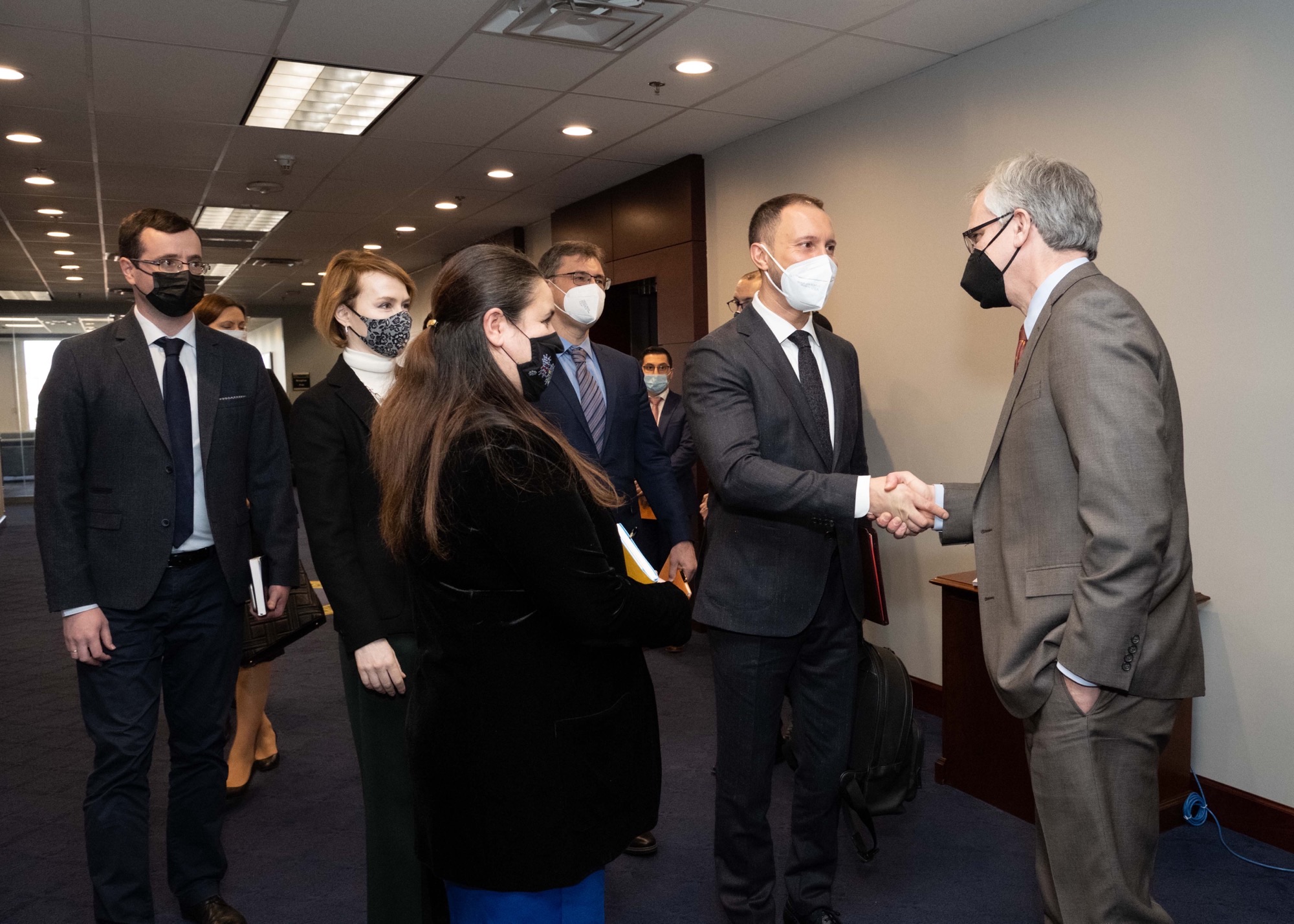
On July 22, the U.S. Department of Energy announced the first 278 projects under the Genesis Mission. Rather than training a single “science model,” the initiative aims to build research workflows that connect AI to simulations, experimental data, and high-performance computing. The selected portfolio comprises 87 projects led by national laboratories, 168 led by universities, 19 industry projects, and four nonprofit projects, involving 342 institutions in total. Topics include nuclear energy, critical mineral extraction, intelligent chip design, and commercial fusion. The largest individual project is a three-year, $60 million nuclear energy program.
Selected teams will have access to agent frameworks integrated into the Genesis Mission Platform, models and software provided by industry partners, and HPC resources from the Department of Energy’s national laboratories and partner facilities. The technical challenge is to place language models within verifiable scientific loops: after agents generate code, propose candidates, or schedule simulations, the results must still be validated through numerical computation, experimental equipment, and domain experts. Data permissions, job scheduling, model versions, randomness, and complete execution traces must also be preserved; otherwise, it will be difficult to determine whether progress came from the model, compute, data, or human intervention.
On the same day, OpenAI committed $4 million worth of Codex access for about 2,000 researchers, along with $3 million in API support for two major scientific challenges. Planned areas include combining models with simulations, materials knowledge, and experiments to discover superconductors that operate at higher temperatures and practical pressures, as well as creating a map of the “machine-accessible frontier” that distinguishes problems that can be advanced using existing data and computation alone from those that still require physical evidence. Some eligible biology researchers will also have access to GPT‑Rosalind.
What is truly worth tracking is not the value of the commitments, but whether the projects publish comparable baselines, failure cases, computational costs, and experimental validation rates. Officials have not yet disclosed the model configurations, agent interfaces, data-governance approaches, or success metrics for each project. Until those details emerge, “improving scientific research productivity” remains a goal yet to be validated.