硬體
Ultralytics 8.4.105 Expands Edge Deployment for YOLO26 Depth Models and Fixes Quantization and Export Paths
Ultralytics 8.4.105 adds support for YOLO26 depth-estimation models on Hailo-8L and Qualcomm QNN, while improving deployment backends including CoreML, OpenVINO, and NCNN. The release also enables interrupted knowledge-distillation checkpoints to be validated and exported directly, although performance gains still need to be measured separately on the target hardware.
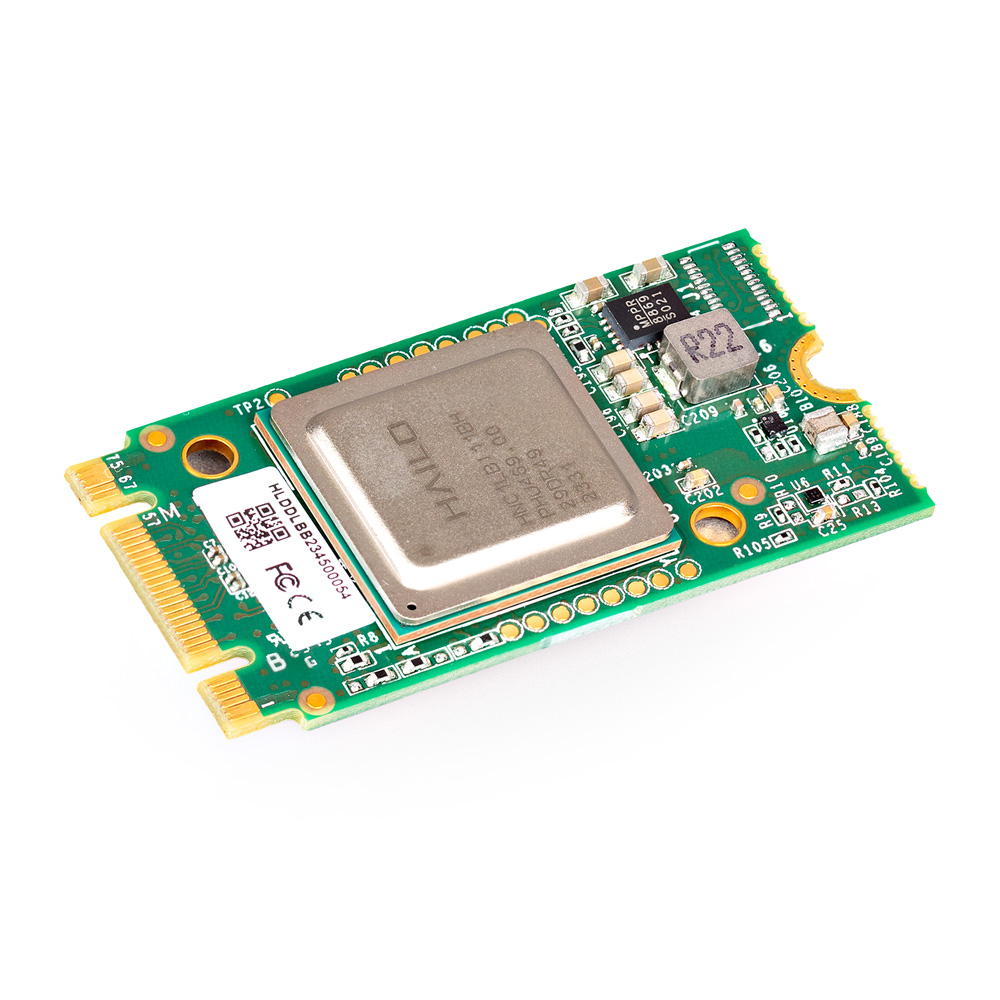
Ultralytics released version 8.4.105 on July 25. Rather than introducing new model weights, the update focuses on completing the engineering pipeline for YOLO26, from training to deployment on heterogeneous hardware. The release adds Hailo-8L export and inference support for YOLO26 depth and broadens Qualcomm QNN compatibility. On CoreML, it switches to exportable upsampling operations, fixing segmentation and depth models with dynamic input sizes. Input dimensions for mobile exports have also been standardized: classification defaults to 224, while detection, segmentation, depth, pose, and oriented bounding box tasks use 640, reducing configuration discrepancies across artifacts for different tasks.
Training and native CUDA inference now offer an optional channels_last memory format, allowing convolutional workloads to take advantage of the NHWC layout, which may be better suited to Tensor Cores. The existing NCHW layout remains the default to avoid unconditionally changing numerical or performance characteristics. Related fixes cover convolution and BatchNorm fusion, transposed-convolution weight axes, and crashes caused by inference tensors during CUDA calibration.
For quantization, OpenVINO INT8 exports now keep DFL operations at floating-point precision, preventing excessive quantization of bounding-box distribution calculations. Semantic-segmentation argmax operations can also be embedded directly in the exported graph. The release additionally fixes NCNN batch inference skipping images after the first, OpenVINO multi-GPU device aliases, and CoreML NMS precision logging.
Another practical change merges distillation checkpoints into the student model, allowing weights saved during an intermediate or interrupted run to be used with predict, val, and export. This reduces the need for manual conversion before resuming training. However, Ultralytics has not provided standardized cross-device throughput and accuracy comparisons. Before upgrading, engineering teams should therefore rerun quantization calibration, dynamic-shape, batch-input, and on-device accuracy regression tests.