具身 AI/機器人
RynnBrain 1.1 Adds Contact Points and Native 3D Grounding to an Embodied Foundation Model, Trains VLA Across Three Robots
Alibaba’s DAMO Academy has released three RynnBrain 1.1 models—2B, 9B, and 122B-A10B—adding contact-point prediction and native 3D grounding. The accompanying RynnBrain-VLA is trained across Unitree G1, Astribot-S1, and Tianji Wuji using a unified action space, although evidence for cross-hardware generalization still comes primarily from the team’s own experiments.
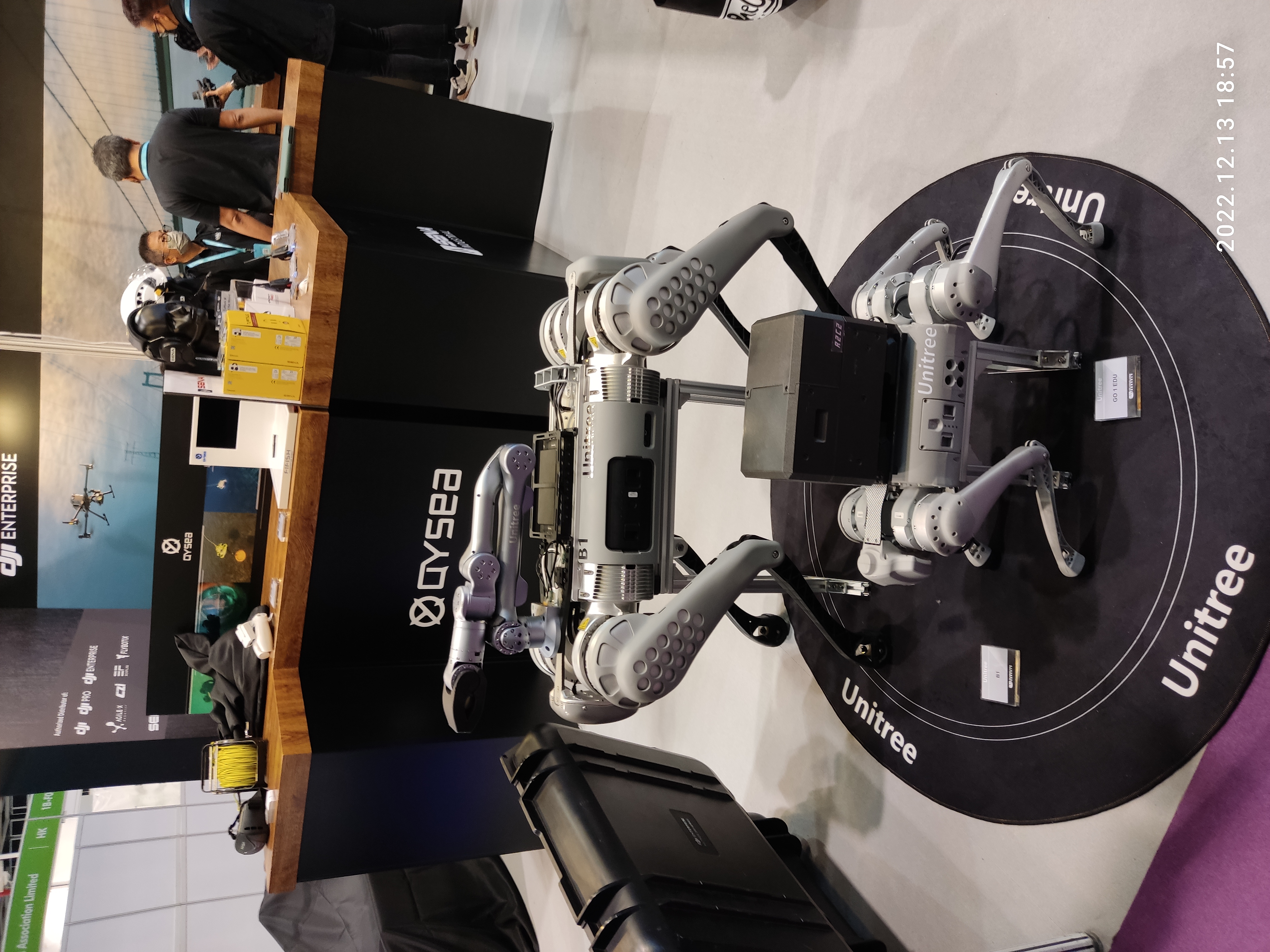
Alibaba’s DAMO Academy has unveiled RynnBrain 1.1, moving embodied models beyond “understanding scenes” toward spatial representations that control policies can use. The series includes 2B and 9B models, as well as a Mixture-of-Experts (MoE) version with 122B total parameters and approximately 10B activated per inference. All three handle embodied perception, spatiotemporal reasoning, grounding, and planning, while adding contact-point prediction. The 2B and 9B versions also support native 3D grounding, allowing the models not only to identify image regions but also to describe objects’ positions and manipulable parts in three-dimensional space.
RynnBrain-VLA is even more noteworthy. The team created a unified cross-embodiment action space and uses embodiment-specific masking to hide joints or control dimensions that a particular robot does not have. The goal is to enable a single policy to learn simultaneously from data collected using Unitree G1, Astribot-S1, and Tianji Wuji. If successful, this approach could reduce the cost of rebuilding models and data pipelines whenever hardware changes. Model weights, code, and demo resources are also beginning to be released publicly.
According to the paper, the 122B-A10B model outperforms the evaluated open and closed models on VSI-Bench, MMSI, and RefSpatial-Bench. Real-robot policies initialized with RynnBrain also outperform the team’s Qwen baseline and several general-purpose Vision-Language-Action (VLA) models. These results, however, should not be equated directly with deployment reliability: the authors selected the test platforms and tasks, while differences in control frequency, camera calibration, dynamics, and safety constraints across robots could all affect transfer performance. Engineering teams should next assess whether the released weights can reproduce the reported results, the 2B model’s on-device latency, and whether new embodiments not included in training can still be adapted at low cost.