硬體
OpenAI Says AI-Redesigned Circuits Have Been Adopted by AMD, With Some Sent for Manufacturing
The collaboration shows that model-proposed circuit changes have entered formal design workflows. Design metrics improved by as much as 14%, but that figure cannot be translated into a speedup for an entire GPU.
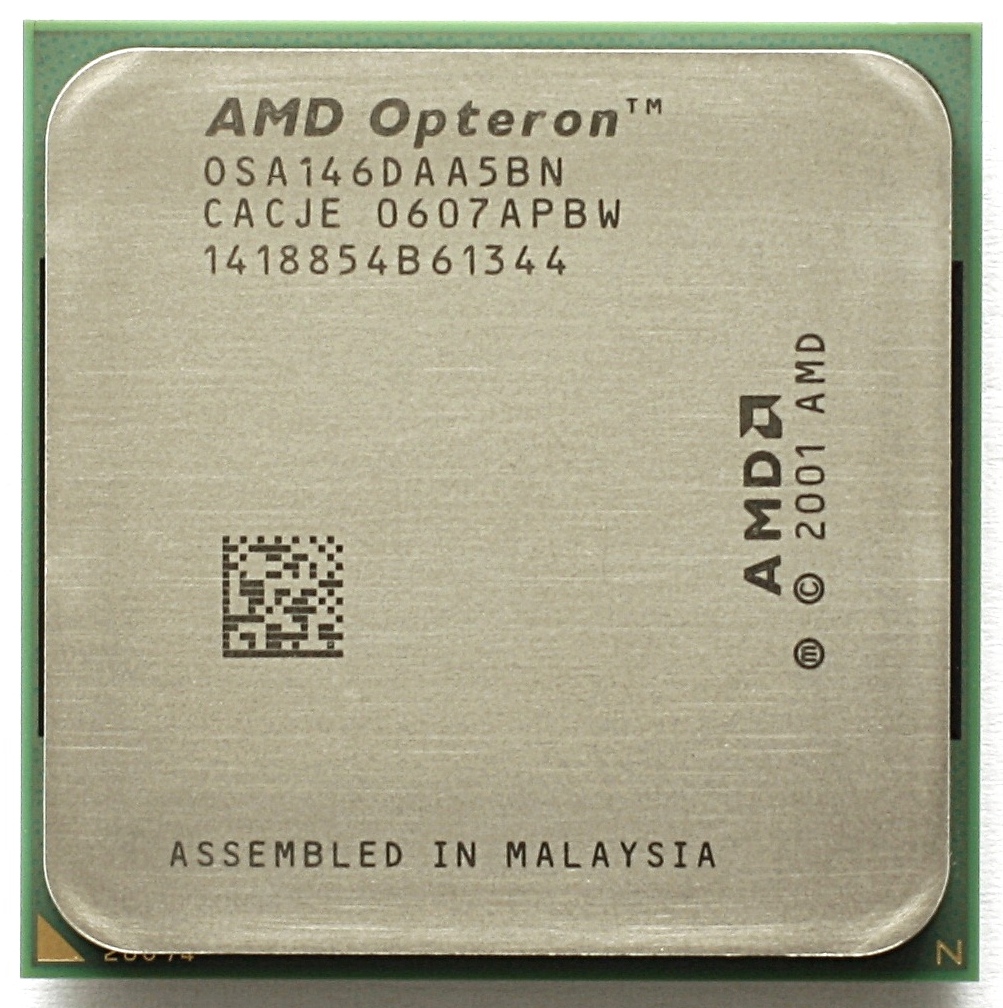
Can AI rewrite circuits while preserving functionality, improving designs, and earning adoption by chip engineering teams? In a report on November 18, OpenAI said AMD had incorporated some model-proposed changes into designs recently sent for manufacturing, while others were saved in official design files for future versions. For teams evaluating AI-assisted hardware design, this offers a concrete example of adoption. But the progress was disclosed by a collaboration partner; it is not a performance measurement of a finished AMD chip. OpenAI’s original report
Up to 14%: Which designs improved?
OpenAI said its models achieved up to a 14% improvement in PPA on AMD’s flagship GPU IP—that is, circuit design modules within a chip—compared with an already highly optimized baseline. PPA refers to power, performance, and area, metrics that designers balance against one another. The report does not break down how the percentage was calculated or explain how each of the three metrics changed. OpenAI’s original report
So the figure should not be read as meaning that an entire GPU is 14% faster, or that each of the three metrics improved by 14%. The report does not say whether the changes sent for manufacturing correspond to the maximum improvement, and it does not provide full details on the process, workloads, or measurement conditions. The figure therefore cannot be used to estimate token throughput or electricity savings for a local model.
Models propose changes; tools check behavior and trade-offs
The models modify SystemVerilog RTL, the hardware code that describes how a circuit computes, controls, and transfers data. OpenAI said the workflow uses Synopsys tools to verify that each rewrite preserves the behavior of the original circuit block, and then evaluate trade-offs in power, performance, and area. OpenAI’s original report
The engineering significance of this approach is that models propose alternative implementations, which design tools then screen. Whether functionality is preserved must be supported by verification results. From this workflow, one can infer that AI may add value by producing more candidate designs to compare, while adoption still depends on verification and design constraints.
OpenAI also described the collaboration’s results in less than five months as equivalent to about a year of progress, but did not publish its estimation method or identify a comparison team. This should be treated as the company’s estimate of engineering progress, not as a general development speedup factor. OpenAI’s original report
Teams generally cannot yet assume the tools are publicly available
The AMD case also does not mean that similar design services are now broadly available. Announced by Synopsys on September 30, the GPT-Synopsys collaboration is a multi-year joint development program: specialized models will operate electronic design automation tools, interpret results, and iteratively make changes, with engineers reviewing the final output. The announcement said early customer technical collaborations were underway and that the service was planned to run on OpenAI-hosted infrastructure, but gave no date for general availability. Synopsys’s official announcement
For hardware teams, the practical question now is how to connect models to existing verification cycles. For users waiting to run models on a new GPU, this report is not enough to support a performance or purchasing decision.