最新模型
MiniMax Releases M3.1 Flash, Targeting Low-Cost Agent Tasks and Million-Token Context
MiniMax launched M3.1 Flash on October 19, tuning sparse inference to improve speed and lower the cost of agent tasks. The model is available through an API, but its weights have yet to be released, and its official performance figures await independent verification.
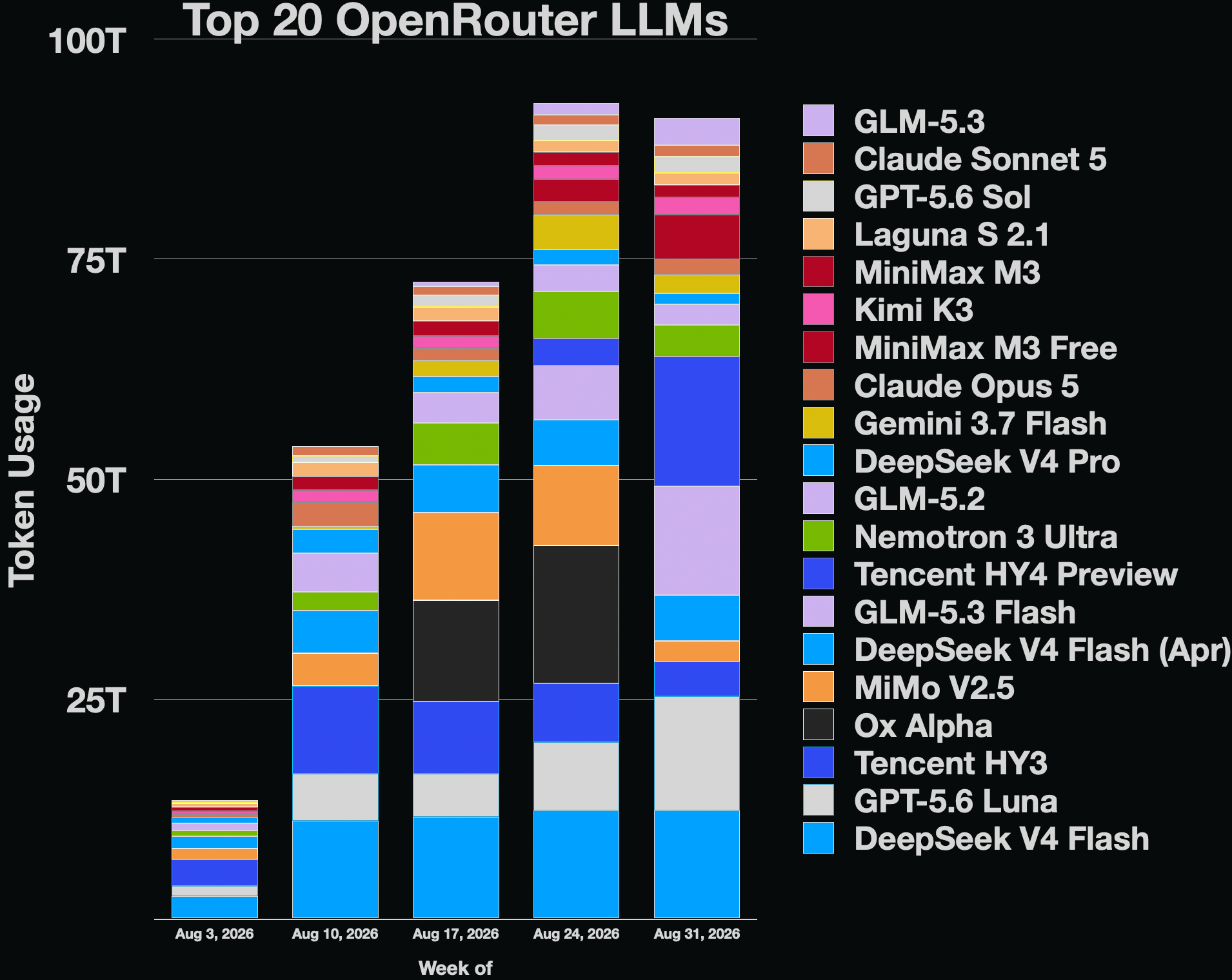
MiniMax released M3.1 Flash on October 19, focusing the update on software development, multi-step tool use, and computer use. The company also confirmed that Space Bunny, previously offered anonymously, was an early version of this model. It is now available through the MiniMax API, M Plan, and MiniMax Code. The model weights are slated for release later, so the launch should not yet be considered a completed open-weight release. Official announcement
Technically, MiniMax says it uses more aggressive sparsification to improve inference efficiency, claiming typical output speeds above 200 tokens per second and a median above 170 tokens per second. However, the announcement does not provide the full hardware, concurrency, and input-length conditions needed to reproduce these speeds, so engineering teams should validate them under their own workloads. The company reports a score of 73.7% on DeepSWE v1.1 and 61.7 on OSWorld V2. These figures may help inform model selection, but they are vendor-reported evaluations. Release notes
API pricing is $0.15 per million input tokens, $0.60 per million output tokens, and $0.015 per million cached input tokens. For agents that repeatedly read codebases, use tools, and revise their results, cache hit rate and the total number of iterations jointly determine task cost. The company claims costs are 70% lower than for its predecessor, but that figure cannot be applied directly to every workflow. Official pricing
Another integration detail comes from OpenRouter: its model page lists a one-million-token context window, accepts text, image, and video inputs, and supports tools and tool_choice. The page also notes that response_format can request JSON output, but does not enforce JSON Schema. Applications that require strict fields and types should therefore add schema validation and failure handling before executing tools. OpenRouter model page
Next, watch for the release of the weights, licensing terms, and deployment specifications, as well as latency, tool argument accuracy, and task success rates with long contexts. Teams preparing to switch from the anonymous preview can get a more useful acceptance test by rerunning existing code-fix and cross-tool tasks while measuring completion time, retry count, and total token usage.