最新模型
XPeng Shows a World Model Shared Across Six Types of Machines; Cross-Machine Learning Benefits Remain Unverified
WorldGPT combines data from cars, boats, drones, and robots in a shared teacher model, aiming to build transferable physical understanding. What is public so far is a demonstration and company-reported evaluations; there is no general developer deployment path yet.
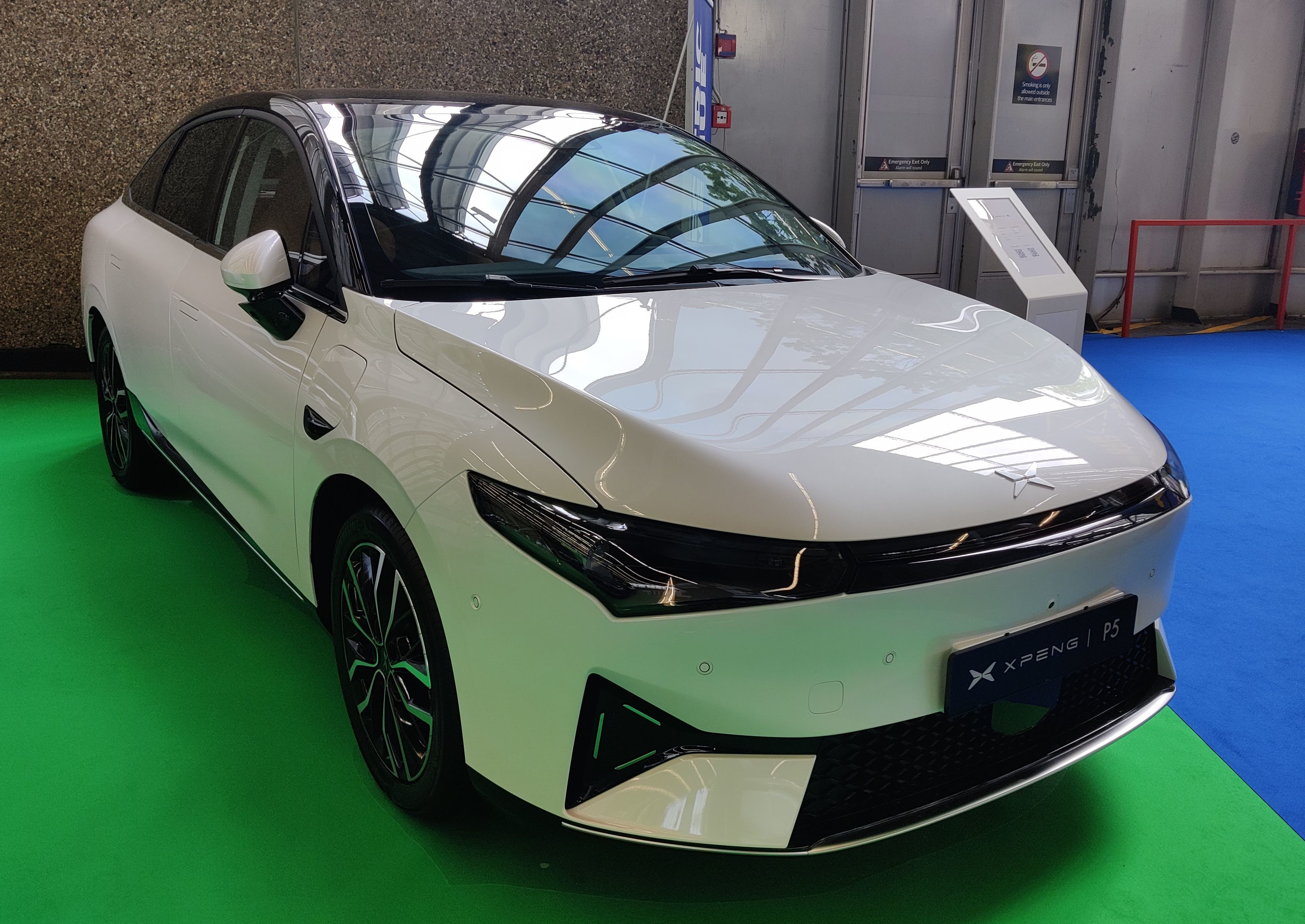
Could an articulated robot arm or a drone use patterns learned from car data? On November 24, XPeng announced WorldGPT, saying the model jointly learns from data for cars, boats, drones, single-arm robots, dual-arm robots, and humanoid robots, supporting scene prediction and action planning. The announcement is notable because it raises the possibility that different machines could share a training foundation, reducing the need to rebuild physical understanding for each one. How much data and development cost this might save has not yet been quantified. XPeng’s official announcement
Shared visual experience, but controls still need adaptation
A “world model” here means a model that predicts how the environment will change in response to actions and helps plan what to do next. According to the project page, WorldGPT takes in about one second of video from one or more cameras, along with an instruction. It can output video of the next few seconds, actions, depth and image segmentation results, as well as textual reasoning. Depth describes distance, while segmentation identifies objects or regions in an image. WorldGPT project page
The challenge in working across machines is that their control methods differ: a car’s steering angle cannot directly control a robot arm’s joints. XPeng uses camera images as a shared representation for learning and says the same set of weights can plan movements for all six types of machines. Its deployment design has a large cloud-based “teacher” transfer capabilities to smaller, specialized “student” models on each machine through knowledge distillation. Distillation is a way for a smaller model to learn the capabilities of a larger one; this design still leaves hardware and control adaptation for each machine to be done. Project architecture
For now, it is best understood as an approach built around a shared teacher followed by adaptation into specialized models. The official announcement describes the model as “distillable,” but does not show that student models for all six machine types have completed deployment or provide measured cost savings. Official architecture description
What the generated videos show—and what they leave unanswered
The project page presents predicted clips alongside real recordings and clearly notes that the footage after roughly the first second is generated by the model. It also includes examples that keep the starting frame fixed while changing the instruction to produce different futures. These materials demonstrate how the model predicts scenes; they are not direct evidence that a machine has performed the same actions in the real world. Demonstration details
XPeng also reports that, as of November 12, 2026, it ranked first on 12 public benchmarks across four areas: autonomous driving, robotic manipulation, visual understanding, and video generation. This is a summary of evaluations published by the company. The announcement does not provide full hardware specifications, accuracy figures, or test settings, so the results cannot be used to estimate deployment costs or combine rankings across different tasks into a measure of general reliability. Official evaluation summary
Our assessment is that a shared model’s ability to handle multiple types of machines and evidence that data from those machines improves one another’s performance are two separate questions, each requiring validation. The materials reviewed do not provide controlled comparisons that add or remove cross-machine data while holding other conditions constant, so the gains from shared training cannot yet be quantified. Project page
Self-hosting users still need a deployment path
At the time of this review, the technical report on the project page was still marked as coming soon. Zeniteq also notes that XPeng has not announced public weights, an API, pricing, or access for general developers. For readers hoping to connect WorldGPT to their own devices, it currently offers a research direction and capability demonstrations, but not enough information to assess whether it can run on their hardware. Project page, Zeniteq report